
Hello world. I’ve had so much to say that I’ve had nothing to say here. The last year has been one of horrifying revelations, stupefying Graces, and a great deal of what has been, for four years now, de rigueur—which is to say, pain and bleeding. The building up of hopes, only to watch the Author of Hope shatter them into ten thousand pieces. I hope to be a more frequent visitor to this quiet old blogworld. For that is how I feel most places, most times: a visitor. Passing through, dislocated, displaced. I do not belong. The foxes have holes, the birds, nests, etc.
What follows is excerpts from a letter I wrote several years ago to a suicidal friend. Said friend has long since departed the valley of death’s shadow, but too has (less) long since been even an acquaintance towards me; I’ve written about this phenomenon elsewhere. It’s common in my life, curiously.
So why post this? I was reminded of a passage (“Maybe it is every two seconds…”) from it recently. My hope is that it may bring life to some of you, as it once did to my once-friend. It is edited; “N.” is a placeholder for a name—perhaps even yours?
I know you intended to call, N. I know, and knew before you wrote. It is okay. I have sat, looking at a telephone, picking it up, putting it down again; unlocking it, opening the Phone app, left thumb hovering over the name of the contact, feeling this howling maw devour my gut from the inside out; as the nausea takes root like a weed, some perverse dandelion, whose flowers are a deathly grey, a silverish void. May I resort to Kierkegaard? He’s the only I’ve seen capture this.
What is a poet? An unhappy man who hides deep anguish in his heart, but whose lips are so formed that when the sigh and cry pass through them, it sounds like lovely music.... And people flock around the poet and say: “Sing again soon”—that is, “May new sufferings torment your soul but your lips be fashioned as before, for the cry would only frighten us, but the music, that is blissful.”
The words, they run off, and you can chase down those darkened corridors of the bleeding soul, but they know all the lost side passages amidst that labyrinth, and before you know it, you’ve still no words, but now you are lost in a dark and terrifying maze. It is why we’re drawn to poetry: because the poet has the words for such “deep anguish.”
But if I may be so terribly dispassionate to say, you mustn’t be so cruel as to cast out your few remaining words as spurts, much less that you wish them on no one. Your words are still your words; we cannot think but in words. I should think there are a good several people who would not wish for you to seal your lips from speech as if they were a hairline fracture in a boat hull to be caulked. I could never discard my valuing of your thoughts, for they are what your words are: mangled, perhaps, or injured, but your thoughts all the same. Your: no one else’s. Not even your, per se: but you yourself.…
O, N. Suffice it, indeed. I know your words well (they are no spurt!), carved as they are into knotted scar tissue of my soul. I lost that way forward quite some time ago. I—N., O, N. What is there to say? What I do know I wish to say, I do not trust the cold telegraphy of email to say well. But N., perhaps, how does Tennyson say it: Some work of noble note may yet be done? Your body, the flesh; it is stronger than you say, you know. We always hear that word through the words of Christ (spirit willing, flesh weak), but you know that like all good swords—for are not words, swords? it is just one little consonant, after all—it cuts both ways. The flesh, in God’s Grace, might be found strong when the spirit is weak. You’ve not lost all peace or hope, N.: for your body labors on, fighting that good fight, even when your spirit has perhaps let the reins go rather slack. The race is yet being run, to use the passive; you, even you yourself, are yet running the race, to use the active.
Maybe it is every two seconds, maybe it is every second, maybe it is twice a second: but your heart continues to beat. This marvelous electricity—the power to carve stone, forge glass, to light the black sky white as Heaven—it continues to explode in your chest, in rapt audience to the Father’s child-like delight in repetition: Again, again, beat again, and again, and again, and again. Eric Liddell said that when he ran, he felt God’s pleasure; and should we be so foolish as to presume that our hearts, these Gordian knots of muscle and nerve and Zeus’ lightning—should not also feel God’s pleasure as they beat, and beat, and beat? For the Author of every whisper and every roar is bent down, in rapturous delight, encouraging your heart along its race. Are not all things held together in Him? Certainly then are all the more our hearts.
And our enemies, that cursed one-third of bent splendor, they like vultures smell the blood of your soul splattered upon the ether. And they needle, and puncture, and stab, and slice, and beat, and bruise. And your body cannot bear it all, not without beginning to crumble. And so you crumble. But remember the words of our Lord: that that which may be demolished, He would raise again in three days. And those daemonic interlopers so especially love the darkness of night, when solitude is thickest; for the Light is less visible then to our eyes. But the Light is yet there. Leave the lights on; burn the candles; throw open unto the evening air the music, the rich, immeasurable inheritance of music we have been given, to saturate your place of suffering in the Beauty of the Light. You mustn’t worry of when sleep will come; sleep will find its own way amidst such interwoven textures of the True.
But your heart, N.; your heart! It yet beats! The battle is not lost, much less the war; perhaps a front or two has fallen, perhaps the battle line is precarious in places. But N., you are, yet, not yours; and Whose you are cannot be altered by the goblins of your pain. Yes it is true, that Beauty is the battleground where God and the devil fight for the soul of man, and yes, it is true that the battlefield of your life—of your heart, your beating, yet-vivacious heart—it is not, to your eyes, perhaps any longer a beautiful place. But it is; O, it is. The defect is in our eyes, in our ravagings by Time; the defect is not your injury, but rather, your injury stems from the defect. The defect is sin, is violence, is death; but the defect is impermanent. Its evanescence was realized so long ago, when death died. For the battlefield is yet beautiful; for the heart yet beats. Of course your attackers draw blood from you; you’ve a heart of flesh, not stone. The horror would be if you were not bleeding! But you are bleeding, and tho’ that is not beautiful or good—that which it is, it is. It comes with the territory, with being a battlefield.
Were there not a great war being fought over you, should not that battlefield be vacant? You, even you, are of such precious value that the enemy has committed so great a force as this to assail and terrorize your body. And I know, N., how large the dragons may loom. How thick their hides; how unflagging their fires; how unflinching their talons.
Sed. Sed nunc vene et vide. Audi.1
It is He that sitteth above the circle of the Earth; He, the everlasting LORD, Who fainteth not, neither is weary. And He giveth power to the faint, to the weary: and they, even you, shall run, and not grow weary; shall walk, and not faint. For is it not by He Who came down from Heaven that we are, in Him, lifted up even unto the same?
You’ve about you, always, N., a legion of angels. If you could only see them. But I should think our eyes could not withstand the sight of such unalloyed Love, such unfettered Power, such untarnished Submission unto God. We should burst into flames at the slightest glimpse. But: but perhaps, N., perhaps we do. Perhaps we do glimpse, and perhaps we do burst into flames. At times and places, in moments and glimpses. Perhaps in the eyes of another; in certain words; in those fleeting hugs; or in the sheer, yet mere, presence: of un-aloneness. And perhaps it is in those moments of submission unto being living sacrifices that we, as sacrifices, burst inwardly into the flames of that same Spirit, the very gift which our Lord left us.…
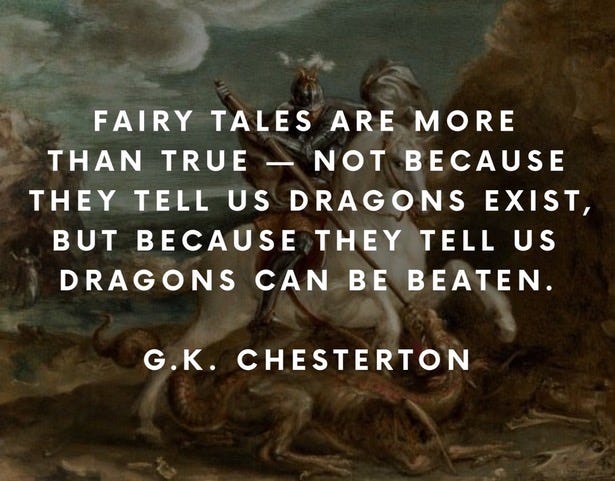
[The image is how I closed the letter.]
[But. But now come and see. Listen.]